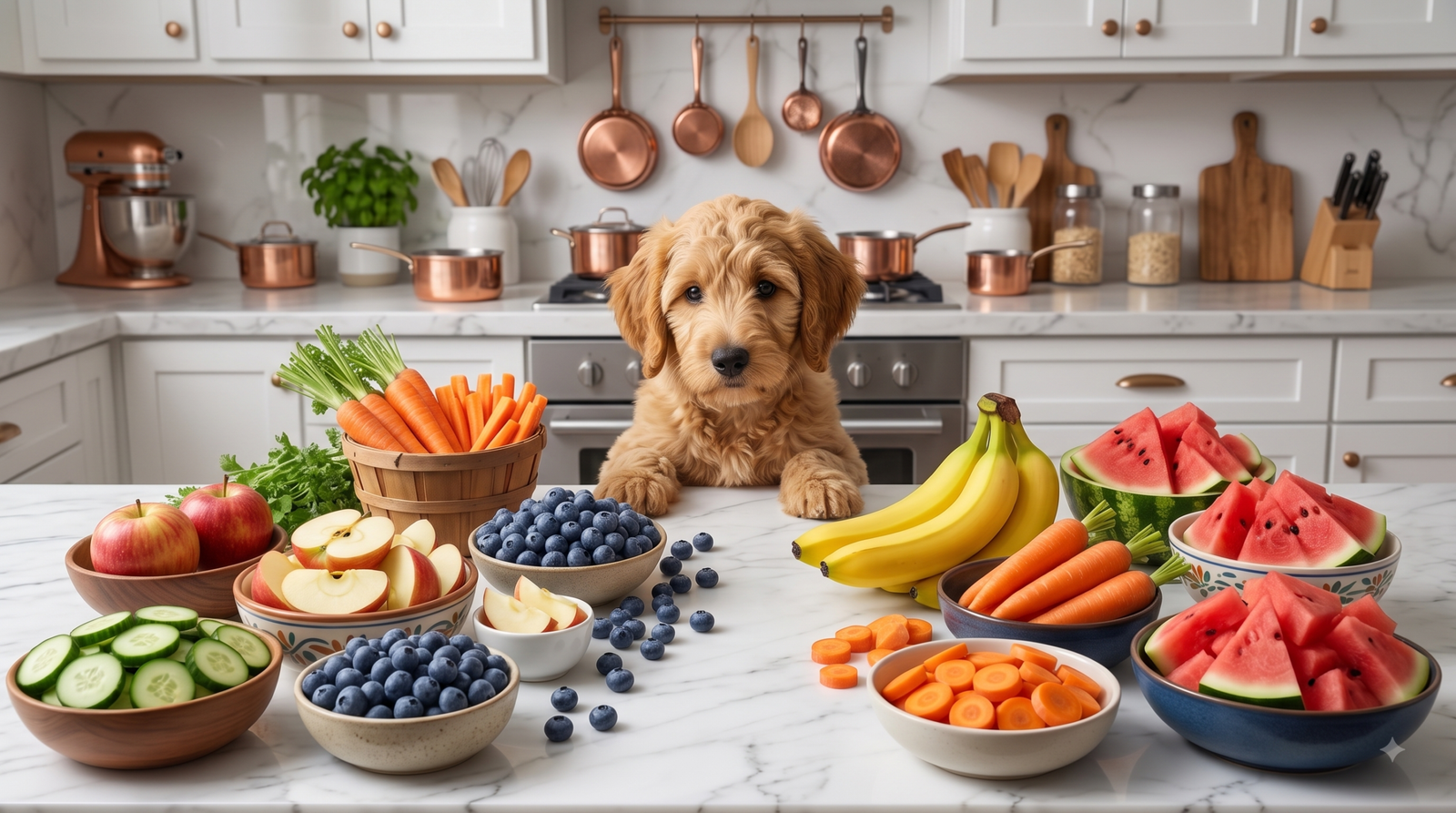
Sharing healthy kitchen scraps with your dog can provide incredible botanical antioxidants and digestive fiber, but treating your pup like a human garbage disposal carries severe risks. Canine metabolism differs fundamentally from ours—what fuels a human can trigger rapid kidney failure or red blood cell destruction in a dog.
💡 The 10% Snack Rule: Fresh human foods should never exceed 10% of your dog’s daily caloric intake. Always serve whole foods plain—completely free from salt, garlic powder, onion seasonings, butter, or artificial sweeteners.
1. Safe Superfoods vs. Deadly Toxins: The Master Cheat Sheet
| Berry | Blueberries | 🟢Safe Superfood | Packed with anthocyanins, fiber, and Vitamin C | Fresh or frozen as training rewards |
| Vegetable | Carrots | 🟢 Safe Superfood | Rich in beta-carotene; gently scrapes dental plaque | Raw sticks or lightly steamed coins |
| Fruit | Grapes & Raisins | 🔴 DEADLY TOXIC | Triggers acute, irreversible kidney failure | Zero tolerance (Immediate ER visit) |
| Pantry | 100% Pure Pumpkin | 🟢 Safe Superfood | Resolves acute diarrhea and eases constipation | Plain canned puree (Not pie mix) |
| Allium | Onions & Garlic | 🔴 DEADLY TOXIC | Destroys canine red blood cells (Hemolytic anemia) | Avoid all raw, cooked, and powder forms |
| Fruit | Apples | 🟢 Safe Superfood | High in Vitamin A, C, and pectin fiber | Sliced fruit only; discard core and seeds |
| Sweetener | Xylitol (Birch Bark) | 🔴 DEADLY TOXIC | Triggers massive insulin surge & liver necrosis | Check peanut butter & yogurt labels |
| Hydration | Cucumbers | 🟢 Safe Superfood | 96% water content; ultra-low calorie hydration | Thinly sliced raw rounds |
| Treat | Dark Chocolate | 🔴 DEADLY TOXIC | Theobromine causes severe seizures and arrhythmia | Keep all cocoa products strictly locked |
2. The 3 Kitchen Red-Flag Foods to Lock Away
- Grapes, Raisins & Sultanas: Toxicity is not dose-dependent. Even a single raisin can cause catastrophic acute renal failure in a large dog. If ingested, seek emergency veterinary care immediately.
- Xylitol / Birch Sugar: A common sugar substitute found in “keto” peanut butters, baked goods, and dental gums. In dogs, it causes an immediate, massive drop in blood glucose followed by acute liver failure.
- Cooked Poultry & Rib Bones: Cooking makes animal bones brittle. They splinter into sharp shards upon chewing, risking esophageal tears, stomach perforations, and life-threatening bowel obstructions.
3. The 4 Golden Rules for Serving Whole Foods
- Strip All Seasoning: Never feed seasoned table scraps. Excess sodium burdens canine kidneys, while garlic and onion powders are highly concentrated toxins.
- Remove Pits, Stems, and Cores: Peach pits, plum stones, and apple seeds contain amygdalin (a cyanide compound) and create severe choking or intestinal blockage hazards.
- The 24-Hour Single-Ingredient Rule: When introducing a new food (e.g., blueberries or steamed broccoli), start with a single bite and monitor your dog’s stool consistency and skin for 24 hours.
- Size Down for Safety: Dogs rarely chew thoroughly before swallowing. Always slice carrots, sweet potatoes, and apples into bite-sized pieces to prevent choking.
4. Frequently Asked Questions (FAQ)
Q: Can dogs safely eat eggs?
- A: Yes. Fully cooked scrambled or boiled eggs are nutrient-dense sources of amino acids, riboflavin, and selenium. Avoid raw egg whites to prevent potential biotin deficiency and salmonella risks.
Q: Is cheese safe for dogs?
- A: In very small amounts as high-value training bait. Most adult dogs are lactose intolerant, so opt for low-sodium, low-lactose varieties like plain cottage cheese or small cubes of mild cheddar.
Incorporating clean, veterinarian-approved fresh foods alongside a balanced kibble base adds variety and vital phytonutrients to your dog’s bowl. Keep toxic staples out of reach, stick to the 10% portion rule, and watch your companion thrive with clean, functional energy.