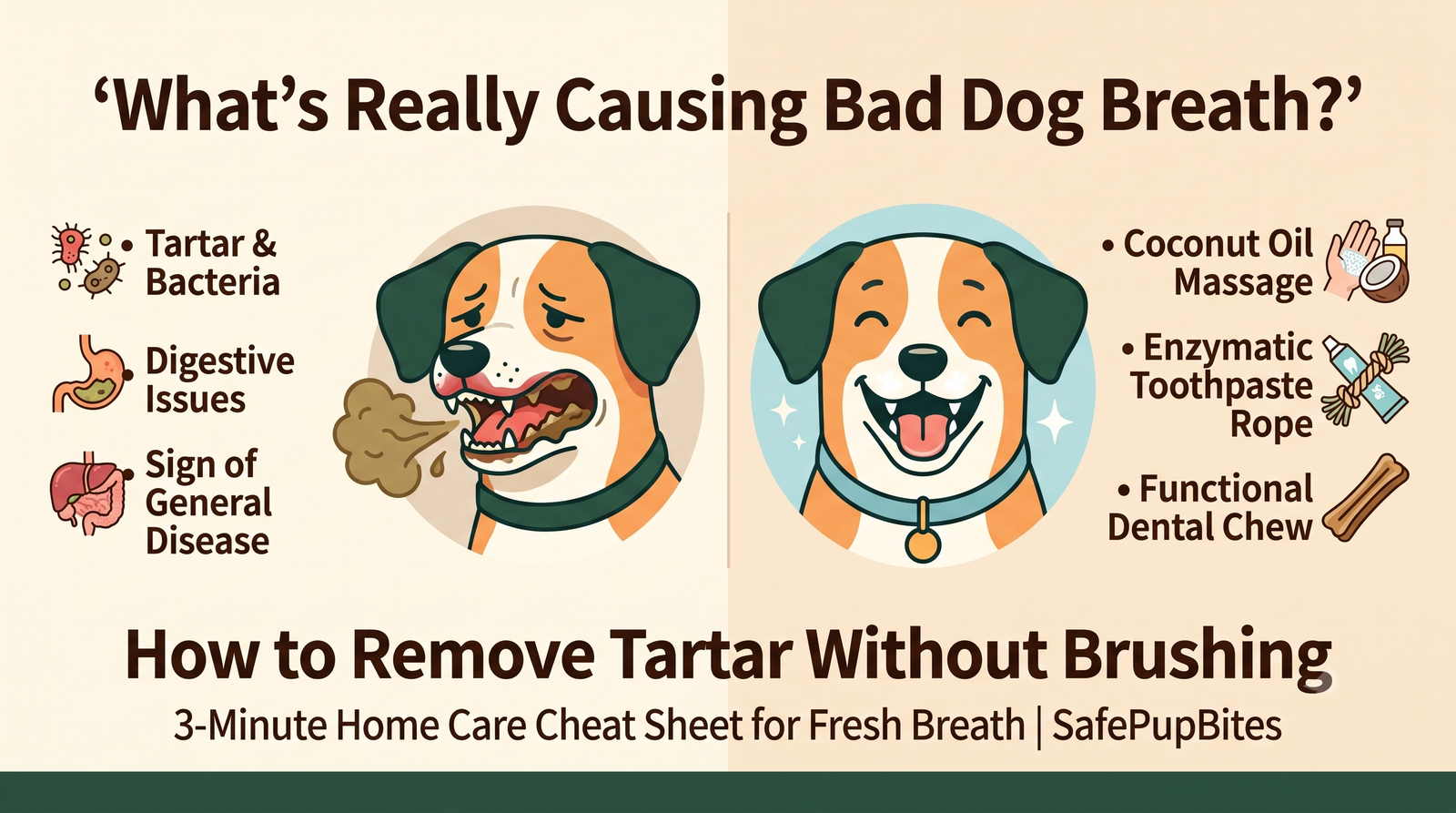
📌 Quick Takeaways • The Real Culprits: Tartar & bacterial buildup (80%+ of cases), digestive upset, or underlying kidney/liver/diabetes issues.
• Why Plaque Hardens So Fast: Alkaline canine saliva hardens soft plaque into rock-solid tartar in just 48 hours—5x faster than humans.
• 3-Step No-Brush Routine: Cotton gauze & coconut oil massage ➔ Enzymatic toothpaste on textured rope toys ➔ Daily dental chews & water additive.
• Red Flag Signs: Bleeding/bright red gums, heavy brown crusting, or dropping kibble while chewing require an immediate vet exam.
Let’s be honest: we all love puppy kisses, but there comes a day when your dog leans in for a sweet morning cuddle and their breath smells like an open sewer.
When my little Pomeranian first started running for the hills every time I pulled out a dog toothbrush, I figured, “Well, he eats dry kibble, maybe a little dog breath is just normal.” I put off dental care for almost a year. But the day I finally lifted his upper lip and saw thick, dark brown tartar encrusting his back molars alongside angry red gums, my stomach dropped.
When I called around for veterinary dental cleanings, the quotes hit $600 to $1,200—plus the anxiety of putting him under general anesthesia. That was my wake-up call to figure out how to clean his teeth at home without turning every evening into a wrestling match.
The 3 Real Reasons Your Dog’s Breath Stinks

- 1. Plaque, Tartar & Anaerobic Bacteria (Over 80% of Cases)
- A dog’s mouth is naturally slightly alkaline (pH 7.5 to 8.5). While this protects them from regular sugar cavities, it causes soft plaque to calcify into rock-hard tartar up to five times faster than in humans. Within just 48 hours, unbrushed plaque turns into a solid mineral crust where smelly anaerobic bacteria thrive, pumping out hydrogen sulfide gases (that classic rotten-egg stench).
- 2. Digestive Upset & Gut Fermentation
- If your dog’s stomach isn’t breaking down their protein properly, sluggish digestion creates gas buildup that travels back up the esophagus, causing stale, sour breath even if their teeth look relatively clean.
- 3. Underlying Health Warnings (Kidneys, Liver & Diabetes)
- Sometimes breath is an internal distress signal:
- Ammonia or urine smell: A warning sign that the kidneys are struggling to filter waste.
- Sweet, fruity, or acetone smell: A classic red flag for canine diabetes.
- Musty, foul rotten-fish smell: Often points toward liver dysfunction.
The 3-Step “No-Brush” Home Dental Routine
If your pup clamps their jaw shut at the sight of a bristle brush, skip the battle. These three low-stress swaps leverage their natural chewing instincts:

- Step 1: The Cotton Gauze & Organic Coconut Oil Rub
- Wrap a clean piece of medical cotton gauze around your index finger and dab a pea-sized amount of raw, extra-virgin coconut oil onto it. Coconut oil is rich in lauric acid, a natural antimicrobial compound that dogs happen to find delicious. Gently lift their lip and massage the outer surfaces of their canines and molars in small circles. The textured gauze lifts soft plaque, while the oil curbs bacterial growth.

- Step 2: Enzymatic Toothpaste on a Textured Rope Toy
- Let your dog do the heavy scrubbing for you. Take a sturdy cotton rope toy or a grooved rubber chew toy and squeeze pet-safe enzymatic poultry toothpaste deep into the ridges. As your dog gnaws and pulls, the fibers floss between their teeth, working the active enzymes directly against the gumline.

- Step 3: Daily Functional Dental Chews & Water Additives
- Give a textured dental chew roughly 30 minutes after dinner to stimulate saliva production, which naturally washes away lingering food debris. (Grabbing a bulk box from Costco is a massive budget saver here.) Pair this with a capful of flavorless, pet-safe dental water additive in their daily water bowl to keep plaque from bonding to tooth enamel throughout the day.
When to Skip Home Care and Call the Vet
Home maintenance works wonders for mild plaque, but it cannot replace medical care once gum disease sets in. Book a veterinary dental exam immediately if you notice:
- Gums that are puffy, bright red, or bleed when touched.
- Solid, stone-like brown crust spanning the entire tooth down into the gumline.
- Your dog dropping food, chewing strictly on one side, or whining while eating.
Untreated periodontal bacteria don’t stay in the mouth—they enter the bloodstream through inflamed gum tissue and can cause long-term damage to the heart valves and kidneys.
Start small tonight with a gentle coconut oil massage. With a few minutes of consistent care, you’ll protect their long-term health and enjoy fresh, cuddle-ready kisses again.