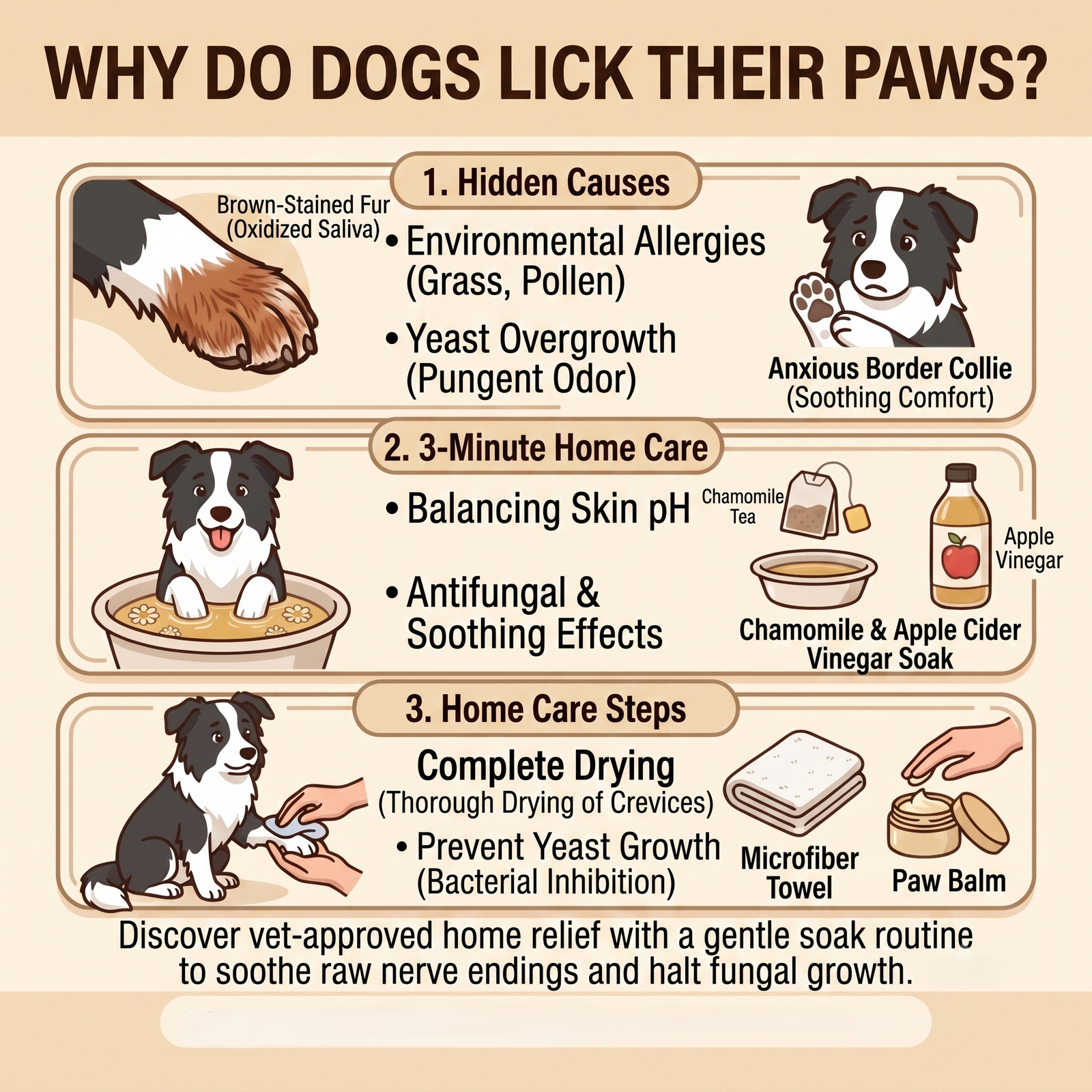

📌 Quick Takeaways • 4 Root Triggers: Outdoor allergens (grass/pollen), yeast buildup (“Frito feet”), dietary food sensitivities, or stress/arthritis. • Why Paws Turn Reddish-Brown: Porphyrin (iron compounds) in canine saliva oxidizes upon contact with air, indicating chronic licking. • 3-Minute Home Protocol: Chamomile & Apple Cider Vinegar soak ➔ Complete crevice dry-down ➔ Thin layer of organic coconut oil. • When to Visit the Vet: Open cysts, pus/bleeding, limping on a single paw, or licking that persists past 7 days.
Every pet parent knows the sound: that steady, rhythmic chewing echoing through a quiet room. You gently tell them to stop, they pause for a few seconds with guilty eyes, and the moment you look away, they go right back to gnawing on their toes like a piece of chew candy.
When my own dog started obsessively chewing on his paws last summer, I figured he was just grooming off some backyard dirt. But within two weeks, the light fur between his toes had turned a deep rusty brown, and a distinct, stale corn-chip odor filled the air.

That rusty tint isn’t dirt or blood—it is a biological marker. Canine saliva is loaded with iron-rich proteins called porphyrins. When a dog licks relentlessly, these compounds react with oxygen and stain the fur a telltale reddish-brown. It is your dog’s physical receipt showing they have been battling an unbearable itch for far longer than just tonight.
The 4 Hidden Culprits Behind Itchy Paws
- 1. Environmental Allergies (Contact Irritation)
- Every outdoor walk exposes bare pads to pollen, fresh-cut grass, lawn fertilizers, and de-icing chemicals. The classic clue: the licking flares up immediately after daily walks and usually affects both front paws equally.
- 2. Yeast Overgrowth (The “Frito Feet” Signal)
- Because paw pads have active sweat glands, moisture easily gets trapped in dark crevices, causing naturally occurring Malassezia yeast to multiply out of control. If their paws smell like corn chips and the skin feels greasy or sticky, yeast is the culprit.
- 3. Food Sensitivities & Gut Inflammation
- An intolerance to common dietary proteins (such as chicken or beef) triggers systemic inflammation that manifests as intense itching at the extremities—namely the paws, ears, and underbelly—year-round.
- 4. Boredom, Anxiety & Joint Aches
- Licking releases soothing endorphins in a dog’s brain. Dogs suffering from separation anxiety often lick out of compulsive habit, while seniors with arthritis lick their wrist joints and toes to numb deep-seated aches.
The 3-Minute At-Home Relief Protocol
For mild redness and seasonal itching without open sores, this quick routine neutralizes microbes and restores the skin barrier:

- Chamomile & Apple Cider Vinegar Soak:Fill a shallow basin with lukewarm water, add 1 cup of raw organic Apple Cider Vinegar, and steep 2 bags of pure chamomile tea. Let their paws soak for 2 to 3 minutes. The vinegar balances skin pH to halt fungal growth, while chamomile calms raw nerve endings.(Note: Skip the vinegar if there are raw cracks or open wounds, as it will sting.)
- Complete Crevice Dry-Down:Moisture is a breeding ground for yeast. Use a clean microfiber towel to thoroughly blot every tiny fold between the toes and underneath the main pad.
- Lick-Safe Moisture Barrier:Massage a pea-sized dab of pure organic coconut oil onto the pads. The natural lauric acid acts as a mild antibacterial shield while keeping rough pads supple.

Red Flags: When to See the Vet
Skip home remedies and book an exam immediately if you notice:
- Swollen, pimple-like red bumps (interdigital cysts) oozing pus or blood between the toes.
- Fixation or limping on only one foot (signs of an embedded foxtail, splinter, or broken nail).
- Chronic chewing that shows zero improvement after 7 consecutive days of home care.
Our dogs navigate the world barefoot every single day. The next time you hear that familiar late-night licking, don’t just tell them to stop—take a closer look at their paws. A quick soothing soak might be the exact relief they have been asking for.