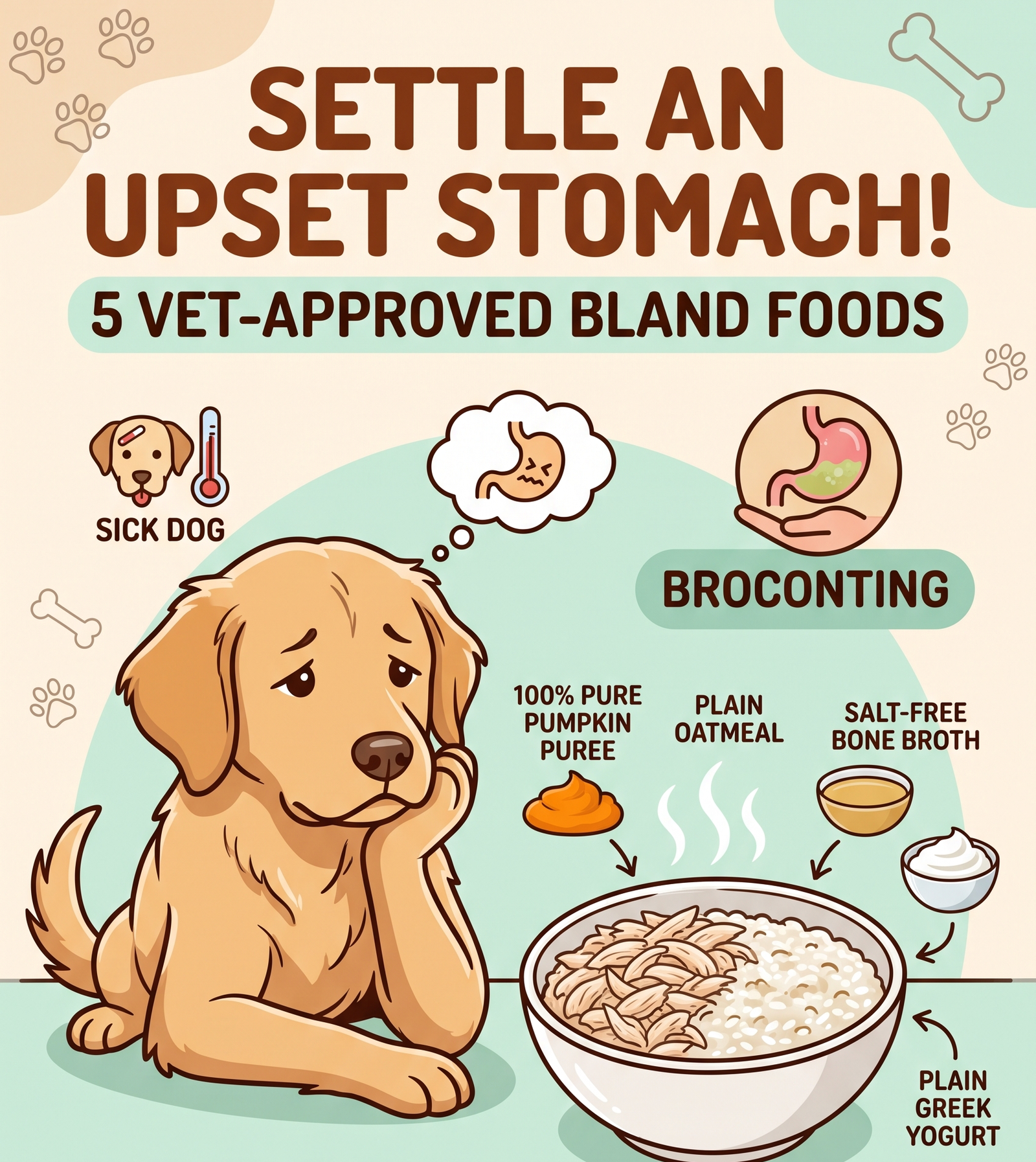
Seeing your dog suddenly vomit or suffer from a bout of diarrhea is alarming for any pet parent. When a pup’s stomach is irritated, jumping straight back into regular kibble can trigger more vomiting; instead, their digestive system needs immediate rest and easily digestible nourishment.
Here is the step-by-step recovery protocol to settle your dog’s tummy safely at home.
Step 1: The Essential 6–12 Hour Fasting Rule
Before offering any food, you must give your dog’s gastrointestinal tract time to rest and reset.
- Withhold Food for 6–12 Hours: Stop all kibble, wet food, and treats immediately. Feeding a dog right after they vomit often triggers painful muscle contractions in the stomach. (Note: Puppies and toy breeds should never be fasted for long periods without consulting a vet due to hypoglycemia risks).
- Offer Small Sips of Water: Do not let them gulp large bowls of cold water. Provide a few tablespoons of lukewarm water every 30–60 minutes to prevent dehydration without upsetting the stomach lining.
Step 2: 5 Gentle Bland Foods for an Upset Tummy
Once your dog has gone several hours without vomiting, reintroduce food gradually using these gentle, veterinarian-approved ingredients.
1. Boiled Chicken and White Rice (1:2 Ratio)

The classic Bland Diet is the gold standard for canine digestive recovery.
- Why it works: Plain white rice is low in fiber and easily absorbed, while skinless boiled chicken provides pure, lean protein.
- How to prepare: Boil boneless, skinless chicken breast in plain water without any butter, oils, or salt. Shred finely and mix with soft-boiled white rice at a 1 part chicken to 2 parts rice ratio.
2. 100% Pure Canned Pumpkin (Not Pie Mix!)

- Why it works: Pumpkin is loaded with soluble fiber, which absorbs excess water in the GI tract to firm up loose stools and ease mild constipation.
- How to prepare: Add 1 to 2 tablespoons of 100% pure pumpkin puree to their meal. Always check the ingredient label to ensure there is zero added sugar, nutmeg, or spices.
3. Salt-Free Bone Broth
- Why it works: Bone broth replenishes vital electrolytes, supports gut lining integrity, and encourages hydration if your dog refuses plain water.
- How to prepare: Simmer beef or chicken bones in water, strain completely, and cool down to skim off all hardened fat. Never use store-bought broth containing onions, garlic, or excessive sodium.
4. Plain Oatmeal Cooked in Water
- Why it works: Plain rolled oats provide soothing soluble fiber that acts as a prebiotic, coating sensitive stomach walls and feeding good gut bacteria.
- How to prepare: Cook rolled oats thoroughly in plain water (never milk) until soft and mushy. Serve at room temperature in small spoonfuls.
5. Plain, Unsweetened Greek Yogurt (Small Amounts)

- Why it works: Packed with natural live probiotics that help rebalance disrupted intestinal flora after a digestive flare-up.
- How to prepare: Add just 1 teaspoon (for small dogs) to 1 tablespoon (for large dogs) over their bland meal. Crucial check: Ensure the yogurt contains NO artificial sweeteners like Xylitol (Birch Bark Extract), which is deadly to dogs.
Step 3: How to Safely Transition Back to Regular Kibble
Do not switch directly from a bland diet to full kibble overnight. Follow this 3-Day Reintroduction Schedule:
- Day 1: 100% Bland Diet (divided into 3–4 small, frequent mini-meals)
- Day 2: 50% Bland Diet + 50% Regular Kibble
- Day 3: 25% Bland Diet + 75% Regular Kibble
- Day 4: 100% Regular Kibble (Return to normal feeding routine)
Step 4: Red Flag Symptoms (When to See a Vet Immediately)
While mild dietary indiscretion usually resolves within 24–48 hours, seek emergency veterinary care immediately if you notice:
- Blood in vomit or dark, tarry stools (melena)
- Inability to hold down even small sips of water for over 2 hours
- Pale, white, or sticky gums
- Extreme lethargy, whining, or bloated/tender abdomen
- Vomiting or diarrhea persisting for more than 24 hours