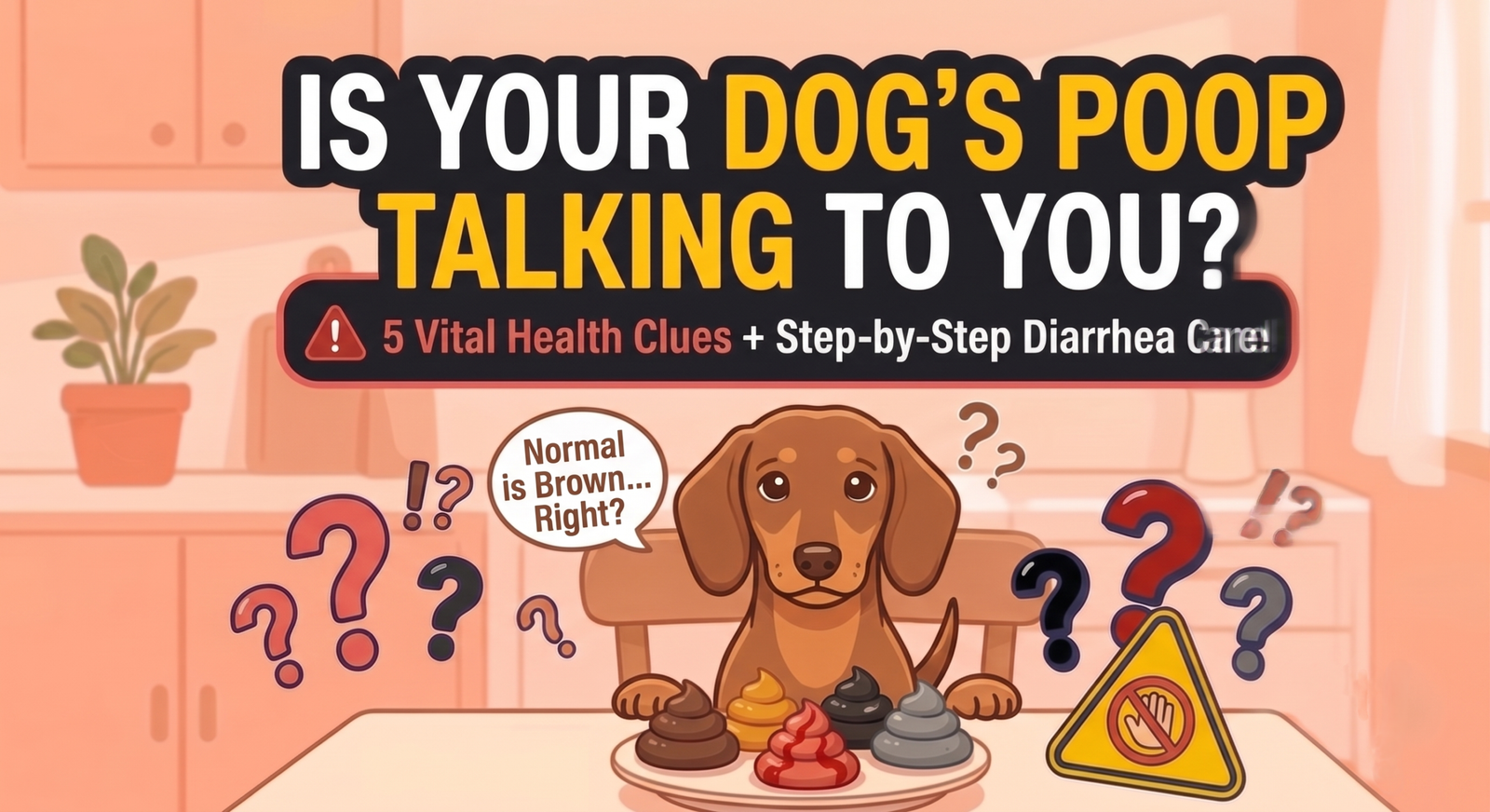
Let’s be honest for a second: being a dog parent means you spend an unexpected amount of time looking at, inspecting, and picking up poop.
While it’s not the most glamorous part of pet ownership, your dog’s stool is actually their daily health report card. Because our furry best friends can’t tell us when their tummy hurts, their stool color, consistency, and smell do all the talking.
Is that sudden soft stool just a mild reaction to a new treat, or is it a red-flag warning sign that requires an immediate trip to the vet?
In this comprehensive guide, we’re breaking down the dog poop color spectrum, the 4 texture stages, and a proven 3-step home care protocol to settle an upset tummy fast.
1. The Dog Poop Color Rainbow: What Does Every Shade Mean?
The gold standard of healthy dog poop is chocolate brown (firm, log-shaped, and easy to pick up without leaving a messy residue on the grass).
If your pup’s stool looks like a different shade of the rainbow, here is what their digestive system might be trying to tell you:
| Stool Color | What It Usually Means | Action Plan |
| Chocolate Brown | Normal, healthy digestion and nutrient absorption. | Keep doing what you’re doing! |
| Yellow / Mustard / Orange | Food intolerance, fast transit time, liver or gallbladder stress. | Fast for 6–12 hours, then monitor closely. |
| Bright Red Streaks | Lower GI tract bleeding (colon, rectum, or anal glands). | Call your vet right away for a stool exam. |
| Black & Tarry (Melena) | Upper GI tract bleeding (stomach or small intestine). | 🚨 Emergency: Immediate vet care required. |
| Green / Chalky Grey | Excessive grass eating, EPI (pancreatic issues), or bile duct blockage. | If persistent, schedule a vet check & fecal test. |
💡 Blogger Pro-Tip: If your dog passes unusual stool, snap a quick, clear photo on your phone before cleaning it up. Vets find visual confirmation incredibly helpful during diagnostics!
2. Texture & Consistency: The 4-Stage Poop Check
Color is only half the story—texture and moisture levels reveal how well the intestines are absorbing water and nutrients.
Stage 1: Hard & Crumbly  ➔  Dehydration / Low Fiber
Stage 2: Soft with Shape ➔  Dietary Overload / Sudden Food Change
Stage 3: Mud / Pudding   ➔  Mild Colitis / Intestinal Irritation
Stage 4: Watery Liquid   ➔  🚨 High Alert / Infection / Toxin Risk
① Stage 1: Hard, Dry, or Pebble-Like (Constipation)
If your pup is straining to go or produces dry, rock-hard nuggets, they likely need more hydration.
- Quick Fix: Ensure multiple bowls of fresh water are available throughout the house, and consider adding a spoonful of 100% pure canned pumpkin puree (rich in soluble fiber) to their bowl.
② Stage 2: Soft & Formed, but Squishy (Digestive Strain)
The stool has shape, but it loses form when you pick it up. This is common when introducing a new brand of kibble too fast or giving too many rich treats.
- Quick Fix: Cut out all human table scraps and treats immediately. Reduce their next 1–2 meals by 20% to give the stomach a break.
③ Stage 3: Shapeless Mud or Pudding (Mild Diarrhea)
When the intestinal lining becomes irritated, food moves too quickly for water to be properly reabsorbed.
- Quick Fix: Initiate a short fasting window followed by a gentle, homemade bland diet (instructions below).
④ Stage 4: Explosive or Watery Liquid (High Risk)
Pure liquid diarrhea can lead to rapid, life-threatening dehydration and electrolyte imbalance within hours. This may point to viral infections (like Parvo), parasites (Giardia), or toxin ingestion.
- Quick Fix: Do not attempt home remedies. Head to an urgent care or emergency vet clinic.
3. The 3-Step Home Care Protocol for Dog Diarrhea
If your adult dog is bright, energetic, drinking water, and having mild dietary diarrhea, this gentle 3-step home routine can help hit the “reset button” on their gut.
[ Step 1: Gut Rest ] ──▶ [ Step 2: Hydration ] ──▶ [ Step 3: The Bland Diet ]
  (6-12 Hour Fast)          (Lukewarm Water)            (4-Day Gradual Re-feed)
Step 1: Give the Gut a Rest (6 to 12-Hour Fast)
When the intestines are inflamed, adding more food causes hyper-motility (cramping and more diarrhea).
- Fast healthy adult dogs for 6 to 12 hours (skip one meal).
- ⚠️ Note: Never fast young puppies under 6 months or toy breeds prone to hypoglycemia without consulting a vet first.
Step 2: Gentle Hydration & Electrolytes
Keep your dog hydrated without upsetting their stomach.
- Cold water can shock a sensitive gut—offer lukewarm water in small, frequent amounts (1–2 tablespoons every 30 minutes).
- You can also offer a few sips of warm, unsalted bone broth (made without onions or garlic) to replenish minerals.
Step 3: The 2:1 Bland Diet & 4-Day Transition Routine
Once the fasting window is complete and your dog’s tummy has quieted down, serve a gentle bland diet:
- The Recipe: 2 parts boiled white rice to 1 part boiled, skinless, boneless chicken breast (no oils, salt, or seasonings).
- Serving Size: Feed small portions (about 30% of their normal meal volume) split across 3–4 mini-meals throughout the day.
How to Transition Back to Regular Kibble:
Do not jump straight back to 100% dry food, or the diarrhea will return! Follow this smooth 4-day reintroduction ladder:
- Day 1: 75% Bland Diet + 25% Regular Kibble
- Day 2: 50% Bland Diet + 50% Regular Kibble
- Day 3: 25% Bland Diet + 75% Regular Kibble
- Day 4: 100% Back to Regular Kibble 🎉
4. 🚨 Red Flag Symptoms: When to Go Straight to the Vet
Home care is strictly for mild, uncomplicated dietary upset. If you notice any of the following warning signs, stop home remedies and call your veterinarian immediately:
- ❌ Blood in the stool: Stool contains bright red blood, blood clots, or looks like black, tarry coffee grounds.
- ❌ Concurrent vomiting: Vomiting repeatedly or unable to hold water down for over an hour.
- ❌ Systemic signs of illness: Fever (above 103.5°F / 39.7°C), pale gums, weakness, shaking, or extreme lethargy.
- ❌ Young age: Puppies under 6 months of age (high risk for Parvovirus, parasites, and dehydration).
- ❌ Duration: Diarrhea that persists for more than 24 to 48 hours despite fasting and a bland diet.
5. Frequently Asked Questions (FAQ)
Q1. Can I give my dog human anti-diarrhea medication like Imodium?
A: Absolutely not without direct veterinary instruction.
Human over-the-counter medications like Imodium (loperamide) or Pepto-Bismol can be toxic to certain breeds carrying the MDR1 gene mutation (like Collies and Australian Shepherds) and can mask severe underlying conditions. Always use vet-prescribed medications.
Q2. Should I give probiotics right away when my dog gets diarrhea?
A: It’s best to wait until the acute watery phase passes. During the initial inflammatory flare-up, even the inactive ingredients or capsules in supplements can irritate the gut lining. Introduce canine-specific probiotics during the recovery phase (Days 2–4 of the bland diet) to help recolonize healthy gut flora.
Q3. Can I use canned pumpkin instead of chicken and rice?
A: Yes! 100% pure canned pumpkin (NOT pumpkin pie filling containing sugar or spices) is packed with soluble fiber that absorbs excess water in the bowel. You can add 1–2 teaspoons (for small dogs) or 1–2 tablespoons (for large dogs) directly to their bland diet.
Final Thoughts: Trust Your Pet Parent Instincts
Your dog’s stool is an open window into their overall health and vitality. By taking a quick second to inspect their poop during daily walks, you can catch health issues early before they escalate.
When in doubt, never hesitate to give your vet’s office a quick call. It’s always better to be safe when it comes to our beloved four-legged family members!
Did this guide help you manage your pup’s tummy troubles? Bookmark this post for future reference and share it with fellow dog lovers! Have questions? Drop them in the comments below! 🐾