Why Is Your Dog Suddenly Licking the Baseboards and Walls? 4 Hidden Causes & Fast Solutions
✨abridgement
- Primary Medical Triggers: Compulsive licking of walls and baseboards often points to underlying gastrointestinal nausea, gastric acid reflux, or bilious vomiting syndrome rather than simple curiosity.
- Behavioral & Dietary Links: Nutritional deficiencies (mineral cravings/pica), environmental boredom from long hours indoors, and residual cooking grease or starch-based adhesives on trim boards also prompt this behavior.
- Actionable Home Remedies: Clean affected surfaces with pet-safe enzymatic solutions, introduce lick mats and puzzle feeders, split meals to shorten overnight fasting, and consult a veterinarian if accompanied by lethargy, lip smacking, or morning bile vomiting.
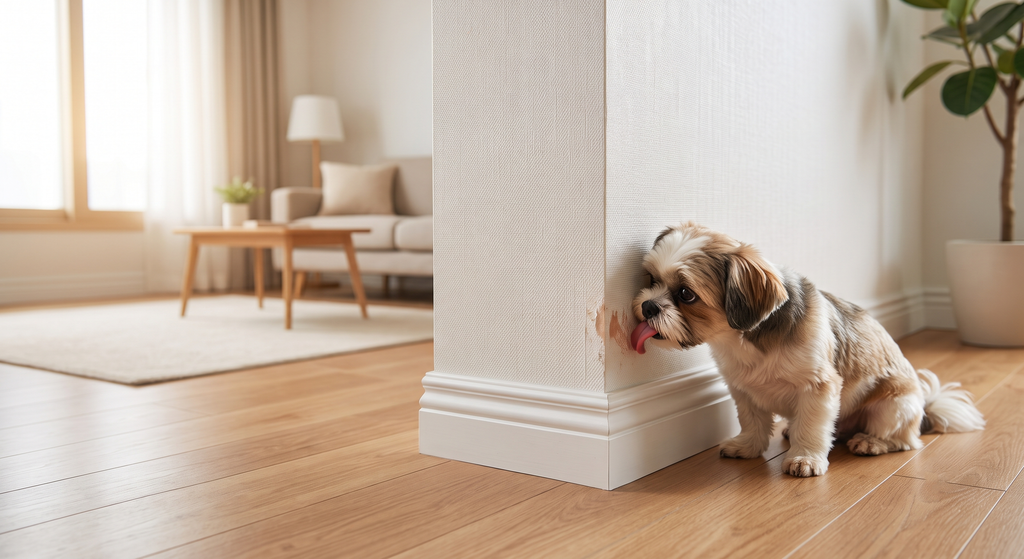
It was a quiet Sunday afternoon during football season when I first heard that bizarre, rhythmic sandpaper sound coming from the hallway. I peeked around the corner, expecting my rescue pup, Cooper, to be chewing on his favorite peanut butter Kong. Instead, I found him pressed flat against the wall, intensely and methodically licking our painted white wooden baseboard like it was a freshly glazed donut.
At first, I laughed it off. We had hosted a barbecue the previous evening, so I figured a stray drop of burger grease or smoked brisket juice must have splattered onto the trim. But when the behavior continued day after day—specifically late at night and right before breakfast—my pet parent alarm bells started ringing.
If your dog is suddenly obsessed with licking drywall, corner molding, or baseboards, they aren’t trying to remodel your house. Dogs explore the world with their noses and tongues, but compulsive surface licking is almost always a clear physical or psychological SOS signal.
1. Silent Gastrointestinal Distress & Acid Reflux (ELS)
In veterinary medicine, sudden, repetitive licking of non-food surfaces is formally known as Excessive Licking of Surfaces (ELS). Clinical studies reveal that nearly 60% of dogs displaying ELS suffer from underlying gastrointestinal disorders.
When a dog experiences nausea, heartburn, or gastric acid creeping up into their esophagus, their natural biological reaction is to stimulate saliva production to soothe the burning sensation. Cool, smooth surfaces like painted baseboards, tile trim, or drywall offer soothing tactile relief.
Watch closely for accompanying subtle cues:
- Frequent lip-smacking, hard swallowing, or excessive drooling.
- Loud stomach gurgling (borborygmi) audible across the room.
- Early morning vomiting of foamy yellow bile, a hallmark sign of bilious vomiting syndrome caused by an empty stomach.
2. Nutritional Imbalances & Pica
If your pup is actively trying to scrape off paint flecks or gnaw on the drywall compound behind the baseboard, they may be dealing with pica—a condition characterized by craving and ingesting non-edible materials.
Commercial kibbles that rely heavily on low-grade fillers or unbalanced homemade diets can leave subtle micro-nutrient voids, particularly in bioavailable calcium, iron, or dietary fiber. Dogs will instinctively seek out minerals where they can smell them. Traditional drywall, gypsum plaster, and joint compounds contain mineral salts and calcium sulfate that a nutrient-deprived canine nose can detect from feet away.

3. Chronic Boredom, Sensory Deprivation & OCD
American household routines often leave dogs home alone for eight to nine hours while family members commute and work. When high-energy or working breeds don’t receive adequate physical exertion and mental stimulation, pent-up frustration transforms into stereotypical, compulsive behaviors.
Repetitive licking triggers an immediate release of endorphins in a canine’s brain, serving as an organic self-soothing coping mechanism. What starts out as exploring a scent on the baseboard can rapidly spiral into an obsessive-compulsive loop whenever the dog feels isolated, anxious during a thunderstorm, or under-stimulated.
4. Lingering Food Oils & Starch-Based Wall Adhesives
Never underestimate the power of your dog’s 300-million olfactory receptors. Baseboards sit at ground zero for household spills. Splattered cooking oil from the kitchen, floor cleaner residues that contain sweet-tasting glycerin, or even trace proteins carried in air currents naturally settle on horizontal trim surfaces.
Furthermore, many traditional wallpaper pastes and eco-friendly home adhesives utilize cornstarch, wheat starch, or potato dextrin as binding agents. To a human nose, a wall smells like dry paint. To your dog, that corner baseboard smells faintly of sweet roasted carbohydrates.

Step-by-Step Fixes for Concerned Pet Parents
- Never Scold or Yell: Punishing your dog spikes their cortisol levels. If the licking is driven by stress or nausea, shouting will only drive them to hide and lick surfaces out of sight.
- Neutralize the Surface: Wash the target area thoroughly with an unscented, pet-safe enzymatic cleaner to eliminate residual cooking aromas and organic grease films. Avoid harsh chemical cleaners with ammonia, which can entice dogs to lick more.
- Shorten the Fasting Window: If acid reflux is the culprit, give your dog a small bedtime snack (such as two tablespoons of plain canned pumpkin or a handful of their regular kibble) right before bed to prevent stomach acid buildup overnight.
- Redirect with Calming Enrichment: Replace the baseboard obsession with safe oral stimulation. Spread plain Greek yogurt or wet dog food onto a textured silicone lick mat and freeze it for 30 minutes before serving.
If the compulsive licking continues for more than three consecutive days or is accompanied by persistent loose stools, reduced appetite, or lethargy, schedule a comprehensive gastrointestinal workup with your local veterinarian.